
The Quiet Role a Mood Board Plays in Good Design
Why a Mood Board Is Often the Most Important Step in Interior Design
Most interiors don’t fail because of bad taste.
They fail because of too many good ideas pulling in different directions.
One minute you’re drawn to warm timber and linen sofas, the next it’s sculptural curves and glossy finishes. Individually, each choice makes sense. Together, the space starts to feel unsettled. Expensive, but unresolved.
In interior design, a mood board is often the first and most overlooked step in creating a cohesive space.
This is where a mood board becomes more than inspiration. It becomes design direction.
@thelane.interiordesign
What an Interior Design Mood Board Really Does
A well-considered mood board answers questions before you realise you’re asking them:
What is the emotional tone of this space?
How warm or cool should it feel?
How structured versus relaxed should it be?
What materials belong together, and which ones don’t?
Rather than selecting items in isolation, a mood board creates a visual framework. Every decision that follows has something to respond to.
The result isn’t trend-driven. It’s cohesive.
Breaking Down the Board
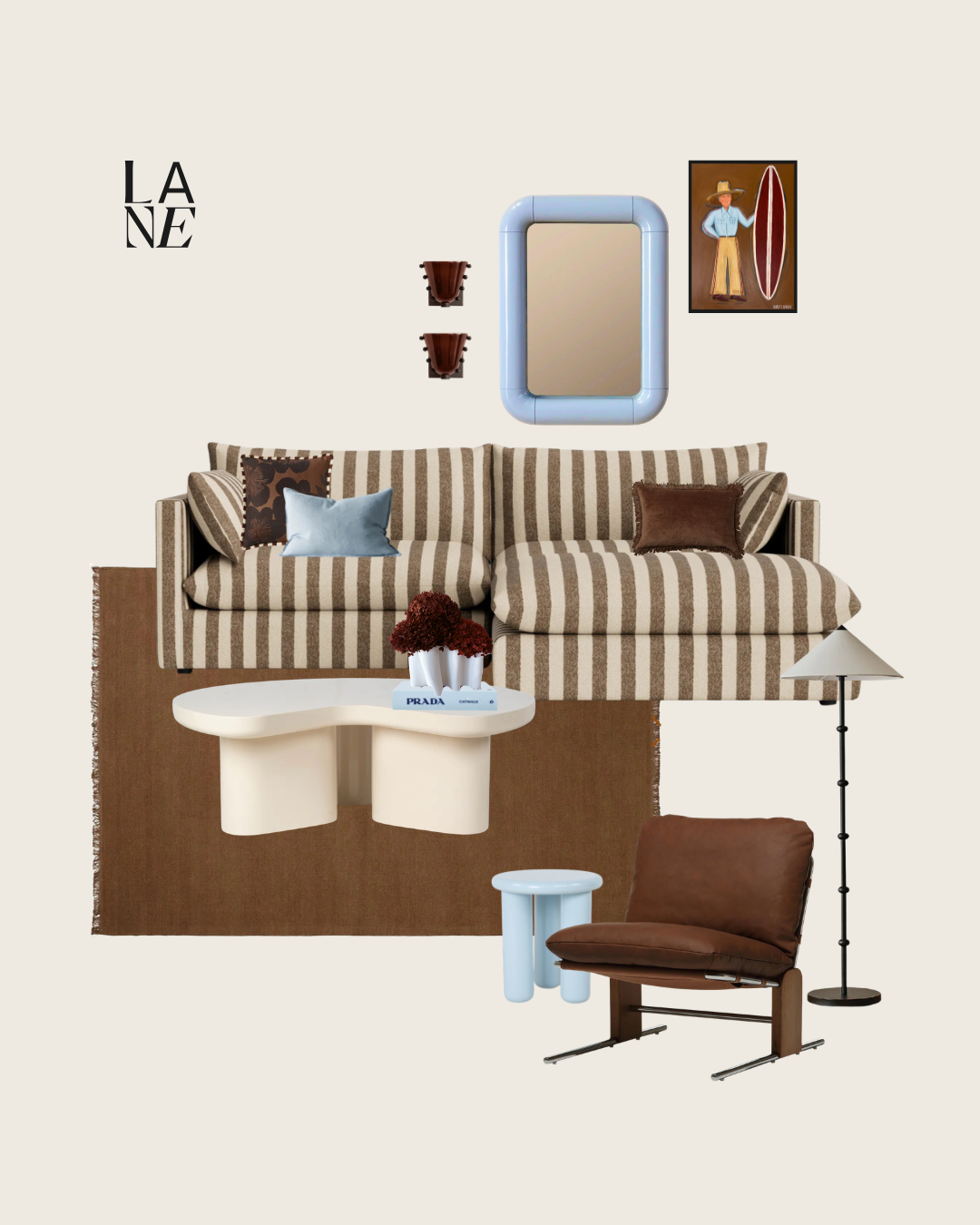
Using this living space as an example, the intention was not to create a “look”, but a feeling of grounded refinement.
There’s a balance at play:
Soft upholstery paired with structured silhouettes
Warm, earthy tones offset by cooler accents
Sculptural furniture that feels considered, not precious
Nothing here is shouting for attention. Each piece knows its role.
This kind of clarity doesn’t happen accidentally. It’s built by understanding how colour, form and texture interact before anything is purchased.
Why This Step Saves Money (Not Adds Cost)
It’s common to assume that engaging a designer, even briefly, adds unnecessary expense. In reality, the opposite is usually true.
Without direction, clients often:
buy pieces that are beautiful but wrong for the space
over-correct after a mistake, replacing items too quickly
hesitate, delay, and live with unfinished rooms
A mood board acts as a filter.
If something doesn’t align with the established direction, it doesn’t make the cut.
That restraint is where the savings live.
The Process Behind a Custom Mood Board
Every board begins with understanding, not aesthetics.
I start by learning:
how the space will actually be used
what existing pieces need to stay
the level of boldness or calm the client is comfortable with
budget expectations, without locking anything in too early
From there, I translate those inputs into a cohesive visual direction that reflects the client, not a template.
The board becomes a reference point they can return to as decisions are made, whether that’s next week or over the next year.
When a Mood Board Is Enough (and When It’s Not)
For many clients, a mood board provides exactly what they need:
confidence to move forward
a shared language with partners or builders
clarity before committing to major purchases
For others, it becomes the foundation for deeper work, such as spatial planning or detailed specifications.
Either way, it’s rarely wasted. Good design decisions compound.
Design Is Easier When the Direction Is Clear
The most successful interiors aren’t rushed, and they aren’t accidental. They’re guided.
A mood board doesn’t lock you in.
It simply gives your decisions somewhere intelligent to land.
And often, that’s all a space needs to finally come together.
This approach forms the foundation of my online design direction service, created for clients who want clarity before committing to furniture, finishes or renovations. It’s a considered first step for those who value cohesion over impulse.
If you’re designing on the Sunshine Coast, explore how mood boards shape coastal projects and introduce our digital service here.
